






EV charging Pocono is moving from “nice to have” to a business driver
The growth of EV charging Pocono infrastructure under Pennsylvania’s NEVI program is creating real, immediate opportunities for local businesses, from EV-friendly hotels and restaurants to garages offering mobile charging or valet charging services. PennDOT’s August 2025 NEVI plan update and mapping show public investment and site selections moving from planning to implementation; regional MPO minutes confirm that downtown Stroudsburg and other Pocono locations are on local priority lists for community and corridor chargers. Local businesses that plan now can capture new visitor spending and longer-range travel patterns.
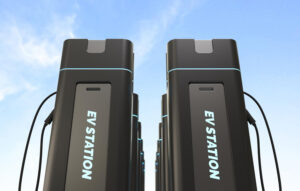
What NEVI is doing in Pennsylvania (brief context)
The National Electric Vehicle Infrastructure (NEVI) program funds charging stations on designated Alternative Fuel Corridors and strategic community locations to ensure EV drivers can travel reliably. Pennsylvania’s NEVI implementation (the Commonwealth’s August 2025 update) reports dozens of active NEVI projects and a multi-phase deployment across highway corridors and community charging locations. As of late 2025, Pennsylvania reports 20+ operational NEVI-funded stations and more projects in the pipeline. The state’s NEVI dashboard and ArcGIS maps list active and planned sites you can inspect.
Where NEVI chargers will appear near the Poconos corridors and community sites
PennDOT’s NEVI planning focuses on corridors (I-80, I-380, I-81 corridors feeding the region) and selected community locations where tourism, dining and retail cluster. The NEPA MPO meeting materials and minutes indicate that two Monroe County priority locations, downtown Stroudsburg and The Crossings/Tannersville area, were explicitly identified as existing or candidate community charging nodes (some existing chargers are Tesla-brand and may not fully meet NEVI open-access requirements, which factors into selection). Use the PA NEVI map and PennDOT site to see project-specific coordinates and whether a site is a corridor (fast chargers) or community (level 2/fast mixed) type.
How does this change travel patterns for Pocono visitors
- Longer multi-stop itineraries become practical. With fast chargers along I-80/I-380 and community chargers in downtowns, day-trippers from NYC or Philly can plan same-day or weekend trips without “range anxiety.” That expands the catchment area for local restaurants, attractions and shops.
- Stops shift from highway travel plazas to downtowns and outlets. NEVI’s corridor chargers (fast DCFC) will anchor highway travel. Still, community NEVI sites at outlets, main streets, and lodging districts will draw drivers off the highway to spend time (and money) locally. MPO minutes explicitly list downtown Stroudsburg as a community charging area to leverage local businesses.
Dwell times increase opportunity for hospitality and retail. Fast chargers typically take 20-45 minutes for meaningful top-ups; level-2 chargers take longer. Businesses that offer comfortable seating, entertainment, local experiences, or bundled promotions will capture that dwell-time spend.
Business opportunities where local firms can capture EV drivers
Hotels & B&Bs
- Offer EV-friendly packages: guaranteed charging at the property, discounted charging rates, plug-and-play parking stalls, or “overnight charging” with valet service.
Promote EV amenities on OTAs (Booking, Airbnb) and Google Business Profile; many EV drivers plan stops around charger availability.
Restaurants & Cafés
- Offer charging-friendly deals (e.g., 10% off for charging customers), create “charger menus” timed to typical charge lengths, or partner with operators of nearby chargers to cross-promote.
Provide comfortable indoor seating with Wi-Fi; advertise charging proximity on maps and social channels.
Retail & Outlets
Bundle promotions with charging providers: “charge while you shop” deals or loyalty points for purchases during charging sessions. The Crossings/Tannersville outlet cluster is a natural fit.
Garages & Auto Services
- Add EV-capable servicing, battery checks, mobile charging/boost services, and EV tyre services (EVs often need specific tyre types).
Consider offering destination charging (pay-per-use) or partnering with site hosts to install customer chargers.
Local transit, taxis & shuttles
Fleet electrification (hotel shuttles, taxi/ride-hail) will be easier with more public fast chargers; taxi/shuttle operators can plan routes that include NEVI corridor top-ups.
New micro-business ideas
- Mobile charging vans for overflow events (festivals, concerts).
- Charger concierge (manages charging sessions, handles billing for property owners).
EV tourism packages: scenic EV routes with curated stops and charging waypoints.
Practical checklist for local businesses to capture EV drivers
(Use this as a one-page action plan.)
- Claim & update your Google Business Profile: include “EV-friendly,” charger details, and parking stall info.
- Add charger info to your website: show distance to the nearest NEVI or public charger and estimated walking/driving time.
- Create an EV package: hotel/restaurant bundles that match charging dwell times (20–60 minutes).
- Train staff: basic EV knowledge (how chargers work, how long a typical top-up takes, safety).
- Partner with charging hosts: approach municipal or private charger operators (site hosts) about cross-promotion.
- Offer amenities for dwell time: comfortable seating, local product displays, and reliable Wi-Fi.
- Monitor charger availability: use apps (PlugShare, ChargePoint) and list live links on your site.
Consider installing destination chargers: Level 2 for overnight guests or a DC fast charger if foot traffic warrants it; consult PennDOT/NEVI resources for potential state incentives.
Site selection & route implications for tourism planners
- Corridor gaps to watch: The NEVI program aims for chargers roughly every 50 miles along Alternative Fuel Corridors. Planners should use the ArcGIS NEVI map to identify “missing links” that can be targeted for private or municipal charging builds.
- Tour routes: Create recommended EV itineraries (e.g., NYC → East Stroudsburg → Delaware Water Gap → Kalahari/Resort loop) showing where chargers are or will be placed; publish these on tourism sites.
Event planning: For festivals and conferences, coordinate with charging providers to add temporary or mobile charging and advertise EV access in event materials.
Funding, permitting & installation basics (how local businesses can get chargers)
- NEVI funds primarily support corridor fast chargers on highways; community and destination chargers may be eligible for other state or federal grants (e.g., VW Settlement, MPO programs, utility incentives). PennDOT’s NEVI plan provides guidance on eligible sites and procurement.
- Utility coordination: DC fast chargers require substantial service upgrades; businesses should consult their utility early for service-upgrade estimates and potential make-ready programs.
- Permitting & ADA: Ensure charger placement follows local permitting, ADA access, lighting, and stormwater rules. A quick pre-application with local permitting staff speeds installs.
Charging networks & payment: Decide on open-access networks (ChargePoint, EVgo, Electrify America) or private networked chargers that support credit-card and app payments.
What local governments and business groups should do now
- Publish a local NEVI & community charging roadmap on tourism/county sites with maps and site status.
- Create EV business toolkits (the checklist above) for hotels, restaurants and retailers.
- Host an EV readiness workshop with utilities, charging vendors, and the MPO to educate site hosts on make-ready, incentives, and timeline.
- Coordinate zoning for chargers (allow chargers and ensure charging stalls are counted in parking calculations).
Track NEVI procurement rounds and push for subgrantee engagement to place chargers near high-value tourism nodes.
How to find live NEVI maps and confirm local chargers
- Pennsylvania NEVI Plan (Aug 2025 update) – program goals and project list.
- PennDOT NEVI program page – deployment dashboard and active project counts.
- ArcGIS NEVI interactive map – see planned and active charger sites and corridor coverage.
NEPA MPO minutes and packets – local candidate community locations and MPO priorities (Stroudsburg, The Crossings).
Act now to be an EV destination
NEVI & public charging buildout is making EV charging in Pocono a practical travel network, not a futuristic promise. For local businesses and tourism operators, the opportunity is simple: add EV-friendly services, market them clearly, and partner with public charging hosts to turn charging dwell time into economic activity. Municipal leaders should fast-track zoning, host outreach workshops, and publish local EV itineraries so the Poconos, with its scenic routes and growing charger network, becomes a preferred EV destination in the Northeast.