





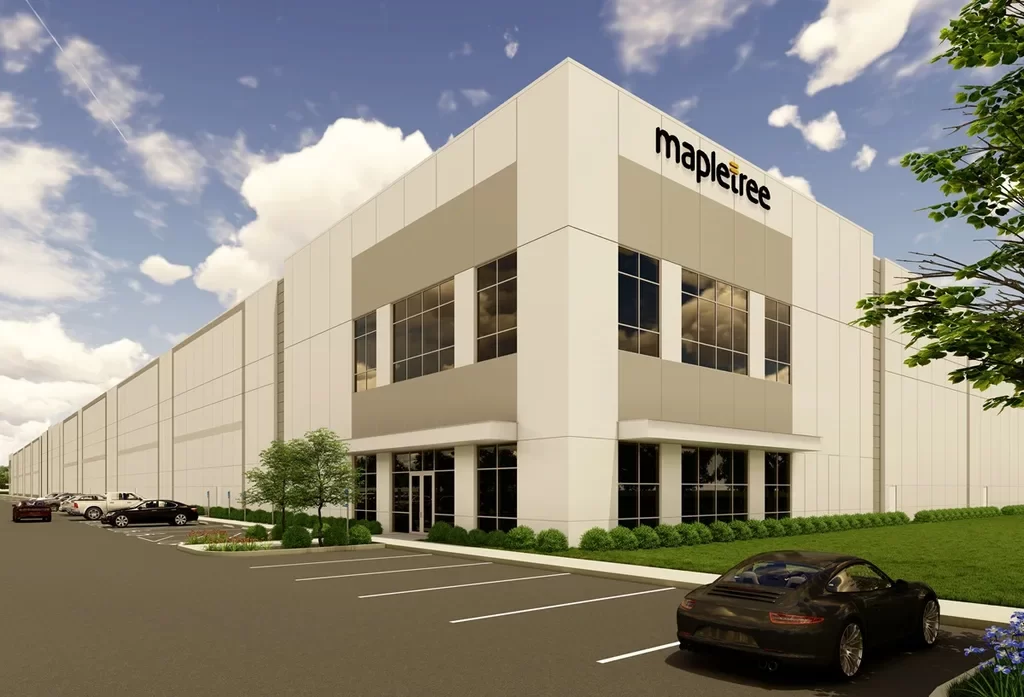


Image Source: www.mapletree.com.sg
Big new logistics space lands in the Poconos
Mapletree Investments, a global logistics developer, has quietly closed on a 37.64-acre parcel in Tobyhanna (Coolbaugh Township) and announced plans to build a 420,262 sq ft purpose-built logistics facility adjacent to its existing 1.3-million-sq ft industrial campus. The project is scheduled for delivery in fall 2026 and adds a significant new footprint to the Pocono industrial cluster that benefits from direct access to Interstate-380 and a short run to I-80.
Below is a comprehensive, citation-backed analysis of the project: what Mapletree is building, realistic estimates of direct and indirect jobs, likely tax and economic impacts, how it will change local supply-chain dynamics, and what Coolbaugh Township and area businesses should watch next.
Project snapshot
- Developer/owner: Mapletree Investments (Mapletree U.S.)
- Site: 1180 Corporate Center Drive East, Tobyhanna (37.64 acres), adjacent to Mapletree’s 2086 Corporate Center Drive West asset.
- Planned building: 420,262 square feet, 40-foot clear height, 64 dock doors, 64 trailer stalls, and 189 parking spaces (developer specs). Delivery expected Fall 2026.
-
Market context: The site sits in an established Pocono industrial cluster with highway access and existing large logistics employers nearby. Mapletree already manages ~1.3M sq ft on an adjacent parcel and ~2.5M sq ft of industrial assets across Pennsylvania.
Timeline & next steps
- Acquisition announced: Mapletree announced the site purchase in early September 2025; the PMEDC posted a local advisory in October 2025.
- Approvals & construction: Expect pre-construction permitting, utility coordination and any township reviews to continue through late 2025 / early 2026. Mapletree cites a completion target of Fall 2026; that timetable assumes streamlined permitting and no major market delays.
Jobs: direct, indirect and realistic ranges
Estimating jobs at a modern logistics facility depends heavily on the building’s use (automated vs. manual operations), tenant type (last-mile, 3PL, retailer distribution), and level of automation.
Two defensible estimation approaches:
- Space-per-job rule (planner’s benchmark): a commonly used planning metric is ~1,500 sq ft per warehouse job (used by regional planning guides for warehouse employment intensity). Using this figure:
420,262 sq ft ÷ 1,500 sq ft/job ≈ 280 direct warehouse jobs. -
Lower-density/high-automation scenario: large, highly automated distribution centers can require far fewer onsite workers (hundreds or even <100). Conversely, labor-intensive operation types (e-commerce pick/pack, 3PL small-parcel) could push headcount higher (400–600). Industry analyses show wide variance depending on automation and use.
Reasonable range for planning: ~150–450 direct onsite jobs, with ~280 representing a middle-of-the-road estimate assuming mixed manual and automated operations. Be explicit: final job numbers will be tenant-specific and influenced by robotics/automation choices.
Indirect/induced jobs (multiplier effects): studies of distribution centers and DCs find that additional local employment is generated through transportation contractors, suppliers, facility maintenance, and spending in the local economy. The U.S. Chamber’s study and economic modelling often show roughly 0.7-1.0 additional jobs per direct job at the MSA level (varies by region and model). Using a conservative multiplier of 0.7, the Mapletree building could support ~105-315 indirect/induced jobs regionally (on top of direct jobs), producing a total employment impact in the ~255-765 jobs band, depending on the actual direct headcount.
Economic output & wages (quick estimate framework)
- Wage levels: 2024-25 data shows U.S. warehouse hourly wages rose. National averages have been in the mid-teens to low-$20 range for hourly roles, with supervisory and managerial roles paying more. Expect local entry warehouse wages to align with regional labor markets (Cushman/MDM market notes).
-
Local purchasing & services: ongoing operations generate recurring spending on trucking, fuel, packaging, facility services, security, property management and professional services, all captured in multiplier estimates above.
Because tenant, function and wage levels are unknown today, a conservative messaging approach is best: present the job ranges and explain drivers rather than promise a single figure.
Tax base impact, how to think about property taxes and local revenue
Project tax contributions depend on assessed value, local millage rates, and any tax incentives the developer/tenant negotiates.
A simple, transparent illustrative calculation (NOT a promise):
- Estimate building value using construction cost ranges: industrial construction cost guides show medium/large warehouses often cost $77-$139 per sq ft (2024-25 market guides show variation by project size and specification). Using a midpoint for a large, high-spec building of $100–$140/sq ft yields a completed building value range:
420,262 sq ft × $100 = $42.0Mup to× $140 = $58.8M. (This is an illustrative construction-cost proxy for built value; actual assessed value and final taxable value may differ.) -
Apply a county effective property tax rate (illustrative): Monroe County’s median effective property tax rate converts to ~0.6% of assessed market value (varies widely by municipality and school district). Using 0.6% as an illustrative effective rate:
- Low-end:
$42.0M × 0.006 ≈ $252,000annual property tax revenue. - High-end:
$58.8M × 0.006 ≈ $353,000annual.
Caveats & reality checks: municipalities typically list millage rates per township and school district; Coolbaugh Township and the Pocono Mountain School District millage will determine the final bill. Developers commonly seek PILOTs, tax abatements or other incentives that can significantly change near-term tax receipts. Use the numbers above only as a transparent example showing scale rather than a guaranteed revenue stream.
Supply-chain & market implications for the Pocono region
Why Tobyhanna matters: the site’s adjacency to I-380 and convenient access to I-80 position Tobyhanna as a regional node for northeast distribution within reach of NYC/NJ markets, northern New Jersey distribution corridors, and upstate Pennsylvania. The new building will:
- Increase regional 3PL capacity: tenants could include national 3PL operators or retail distribution arms needing Northeast reach.
- Boost local carrier demand: expect higher business for regional trucking companies, drayage operators, and local freight brokers, especially for last-mile and cross-dock services.
- Support local suppliers: packaging, maintenance, staffing agencies, and security/landscaping firms will see new demand.
-
Shift real estate dynamics: additional modern bulk inventory can attract tenants away from older product or pull new demand into the corridor (raising rents for newer product and pressuring older facilities to retrofit or find niche uses). Market reports show medium/large warehouse demand rebounded in 2025, even as vacancy dynamics shift regionally.
What this means for local warehousing & transportation firms
- Opportunity: local carriers and small 3PLs can bid for business (line-haul, local pickup/delivery, final-mile). Regional trucking firms should prepare for increased demand by updating fleet capacity and driver recruitment efforts.
- Competition: national carriers and contract logistics firms may outcompete smaller providers on price and scale. Local companies should differentiate with specialized services, reliability, or niche offerings (cold chain, white-glove, B2B consolidation).
- Partnerships & subcontracting: smaller firms can position themselves as subcontractors (yard management, cross-dock labor, packaging) to larger tenants seeking flexible local partners.
- Labor & training: employers should coordinate with Monroe County workforce programs, technical schools and PA CareerLink to create quick-start hiring pipelines and training for warehouse roles.
Community concerns & infrastructure impacts
Large logistics facilities bring common community issues that local planners and elected officials will need to manage:
- Traffic and road wear: increases in tractor-trailer trips may require road improvements, turning lanes, or new signal timing plans. Coolbaugh Township planning records show active development review processes and recent ordinances around industrial uses; expect traffic studies during permitting.
- Environmental & stormwater management: large impervious surfaces and truck activity require modern stormwater controls and community review.
- Noise & light: operational hours and yard activity can generate noise and lighting issues. Design, setbacks and landscaping mitigate impacts.
-
Community reaction: local citizen groups often scrutinize large industrial projects; social media and civic groups in the area have previously raised concerns about large developments. Early, transparent engagement will lower friction.
Zoning, permitting & incentives: what to watch
- Township hearings & planning commission: check Coolbaugh Township public packets and Board of Supervisors calendars for conditional use/site plan hearings or traffic/stormwater studies filed by Mapletree or contractors. Public notices and planning packets are the earliest places to track required approvals.
-
Economic development incentives: Mapletree and its tenants may request tax incentives or infrastructure support. Monitor PMEDC and county meeting minutes for incentive discussions.
Actionable recommendations for local stakeholders
For municipal leaders:
- Require thorough truck-traffic and road-wear studies and work with PennDOT on any state road impacts.
-
Coordinate with school districts and county assessment to estimate revenue and consider mitigation or community benefit agreements.
For local carriers & small 3PLs:
- Start outreach to Mapletree’s leasing team and local brokers now offer scalable services and emphasize quick local response capability.
-
Develop driver-recruitment plans and training pipelines (partner with PA CareerLink / community college).
For chambers & workforce groups:
- Prepare rapid-hire job fairs tied to the project’s construction and operations phases.
-
Package training for warehouse tech, forklift certification, safety, and logistics software skills.
Mapletree’s planned 420,262-sq ft logistics facility in Tobyhanna is a material vote of confidence in the Pocono industrial corridor. If the development proceeds on schedule, it will expand regional logistics capacity, create a substantial number of direct and indirect jobs (likely ~150-450 direct roles and additional jobs via spillovers), and add a meaningful new tax base to local budgets while also generating the predictable traffic, permitting and infrastructure questions that accompany large logistics projects.
For PBNews local readers, the most important things to monitor over the next 6-12 months are: tenant announcements (who will lease the building), Coolbaugh Township permit filings and traffic/stormwater studies, Mapletree’s construction timeline, and local workforce hiring plans.